Mitigating Electrical and Fire Risks in High-Acuity Care: NFPA 99 & Accrediting Body Imperatives

High-acuity spaces—such as operating rooms, intensive care units, and cardiac catheterization labs—are high-risk areas where advanced medical technology directly interfaces with vulnerable patients. In these settings, micro-shocks, utility interruptions, or localized flash fires can have catastrophic outcomes. 


Mitigating these risks requires deep technical adherence to code standards alongside rigorous clinical workflows.

The Technical Baseline: NFPA 99 Health Care Facilities Code

NFPA 99 (2012 Edition, as mandated by CMS) establishes risk-based categories for electrical and gas systems based on the risk to patients. Category 1 spaces are those where procedures are performed that could result in major injury or death if utility systems fail. Under Chapter 6 (Electrical Systems), facilities must maintain isolated power systems (IPS) and line isolation monitors (LIM) in wet procedure locations to protect patients against electrical shock.


Survey Vulnerabilities: CIHQ and Joint Commission Directives

During surveys, both TJC and CIHQ closely inspect the testing logs for these specialized electrical environments. TJC Standard EC.02.05.01 requires facilities to manage utility risks, specifically focusing on the routine inspection of ground- fault circuit interrupters (GFCIs) and the regular calibration of LIM alarms. CIHQ surveyors frequently evaluate surgical staff on their understanding of the LIM panel: if an alarm sounds, do clinicians know that it signifies a critical loss of electrical isolation that could cause patient harm if a second fault occurs?


OSHA 29 CFR § 1910 Subpart S Alignment While NFPA 99 protects the patient, OSHA Subpart S (Electrical Safety) safeguards the clinical staff operating the machinery. Employers must ensure all electrical medical devices are free from recognized hazards. Exposed wiring, unapproved extension cords, or failing to lock out/tag out malfunctioning medical hardware violates OSHA standards and places both employees and patients at immediate risk.

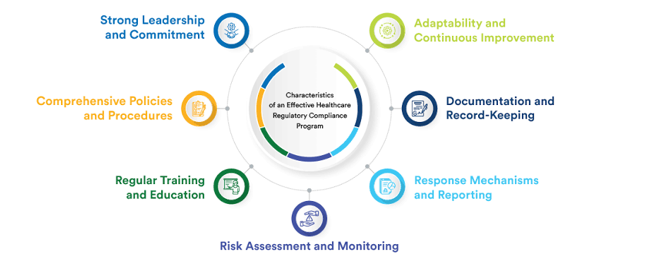
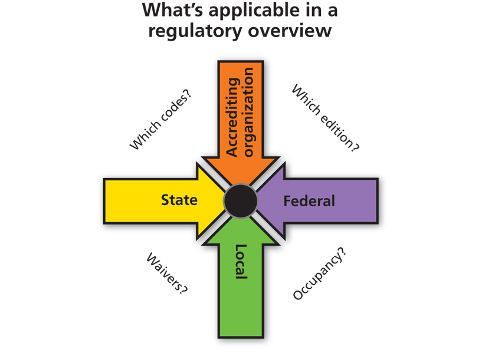
Diagram titled “What’s applicable in a regulatory overview” with state, federal, local, and accreditation organization branches.

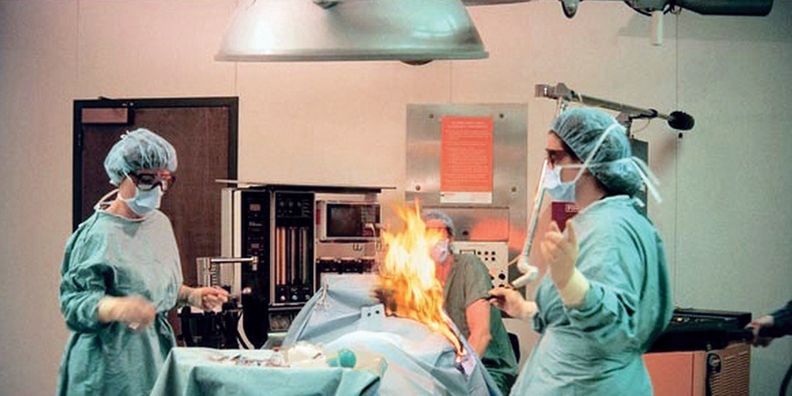
Clinical Action Plan for Fire Prevention in the OR

  • Surgical Fire Triad Drills: Train OR staff on the interactions of oxidizers (oxygen/nitrous oxide), ignition sources (electrosurgical units/lasers), and fuels (alcohol-based skin preps/surgical drapes).
  • Enforce Alcohol Prep Dry Times: Ensure a minimum 3-minute dry time for alcohol-based surgical preps before draping the patient to eliminate flammable vapors, as required by NFPA 99 and CMS quality indicators.
  • LIM Response Testing: Conduct monthly facility testing of Line Isolation Monitors and incorporate response procedures into annual competencies for clinical staff.
Red fire alarm box on a white hallway wall with a long corridor in the background
April 4, 2026
CMS Conditions of Participation (CoPs) and the Unified Focus The Centers for Medicare & Medicaid Services (CMS) establishes the baseline for safety through the Conditions of Participation (CoPs). Under 42 CFR § 482.41 (Physical Environment), hospitals must ensure that the physical plant is constructed, arranged, and maintained to secure the safety of patients. CMS holds leadership strictly accountable for ensuring that life safety deficiencies do not interfere with clinical intervention. When a surveyor enters a facility, they cross- reference the clinical patient logs with facility maintenance schedules to ensure environment-driven risks—such as positive/negative pressure room failures—did not impact immunosuppressed patients. Accrediting Bodies: CIHQ, Joint Commission and Other Aos’ Interventions Accrediting organizations like The Joint Commission (TJC) and the Center for Improvement in Healthcare Quality (CIHQ) act as the enforcement arms for CMS via deemed status. TJC’s Environment of Care (EC) and Life Safety (LS) chapters explicitly detail how physical space directly impacts clinical delivery. For instance, TJC Standard EC.02.03.05 requires hospitals to maintain and test fire protection and suppression systems, mapping directly back to Life Safety Code compliance. Simultaneously, CIHQ’s structural surveys place massive emphasis on a unified environment. CIHQ approaches physical plant standards as a direct extension of standard clinical operations. They emphasize that blocked egress corridors or improperly stored medical equipment don't just constitute technical facility violations; they are direct barriers to rapid code-blue response and emergency patient evacuations. 
Hands tapping tablet with “Best Practice” on screen, blue and white corporate interface
March 3, 2026
National Patient Safety Awareness Week: "Team Up for Patient Safety" This year’s theme, “Team Up for Patient Safety,” is more than just a tagline; it’s a regulatory requirement. Under the Accreditation 360 model, surveyors are looking for evidence that the "team" includes the patient. The Shift : We are moving away from "doing for" the patient to "doing with" them. Compliance Tip : Ensure your clinical teams are documenting "Patient/Family Engagement" in care planning. Surveyors are currently tracing patient charts to see if the family's voice is present in the discharge and safety education notes. Facility Management & Infection Control: The Water Management Audit As the weather warms, your water systems become a primary infection prevention risk. Legionella Risk Assessment: If you haven’t updated your risk assessment for "dead legs" in the plumbing after recent facility renovations, now is the time. Utilization Review: The "WISeR" Way to Audit As of January 2026, CMS officially launched the WISeR (Wasteful and Inappropriate Services Reduction) program. If you operate in one of the pilot states (TX, AZ, NJ, OH, OK, WA), your Utilization Review (UR) team is likely feeling the heat. AI Scrutiny : CMS is now using AI-assisted screening for prior authorizations. The "Explainability" Rule : If your facility uses AI to help with UR decisions, you must be able to "explain the math." Regulators are cracking down on "black box" algorithms that deny care without a clear, clinical justification by a licensed reviewer. Inpatient-Only (IPO) List : Remember that 2026 saw the removal of 285 procedures from the IPO list. Your UR team must ensure these musculoskeletal and orthopedic cases are being channeled to the appropriate outpatient setting to avoid automatic denials. 
AED in a white cabinet on a green tiled wall, with a heart symbol and AED signage.
February 28, 2026
February may be the shortest month of the year, but in the world of healthcare facilities and regulatory oversight, it often feels like the longest. Between the launch of the Joint Commission’s Accreditation 360 and the sudden shifting of federal staffing mandates, your compliance "To-Do" list likely looks more like a "To-Don't-Panic" list. Below is your breakdown of the critical updates, deadlines, and strategic shifts defining February 2026. Regulatory Roundup: The "Great Repeal" of 2026 The most significant news hitting desks this month is the formal pivot in Long-Term Care (LTC) staffing. CMS Staffing Mandate Repealed : Effective February 2, 2026 , CMS officially rescinded the 2024 minimum staffing requirements (the 3.48 HPRD mandate). The Fine Print : While the "one-size-fits-all" numbers are gone, the Enhanced Facility Assessment requirements are still very much alive. Regulators are moving away from rigid ratios toward a "competency-based" model. You must still prove your staffing levels match your specific resident acuity. What it means for you : It’s time to double-check your assessment documentation. Auditors aren't counting heads as strictly, but they are scrutinizing the logic behind your staffing decisions. HIPAA & Privacy: The February 16th Pivot If you haven't updated your Notice of Privacy Practices (NPP) yet, you are officially behind. February 16, 2026, marked the deadline for compliance with the final rule aligning 42 CFR Part 2 (Substance Use Disorder records) with HIPAA. Lawful Holder Doctrine : Any practice receiving SUD records is now a "lawful holder," triggering new obligations for how those records are handled in legal proceedings. Reproductive Health Privacy : New prohibitions are in place regarding the disclosure of PHI for investigations into lawful reproductive healthcare. Security Rule Modernization : Th e HHS Office for Civil Rights (OCR) is phasing out the "addressable" vs. "required" distinction. By late 2026, every safeguard will be mandatory. Tech & Sustainability: Do Less with Less The 2026 facility mantra has shifted from "do more with less" to "do less with less"—meaning we are using data to eliminate wasted effort. Unified Platforms : The era of separate spreadsheets for maintenance, energy, and compliance is over. Integrated CAFM (Computer-Aided Facility Management) tools are now the standard for audit-ready reporting. The "Heart" of the Facility : Since it’s American Heart Month, it’s the perfect time to run a Life Safety check on AEDs and Cardiac Crash Carts. Ensure your battery replacement logs are digitized—paper tags are so 2024. A Note on Candor : Let’s be real—the repeal of the staffing mandate might feel like a relief, but it’s actually a trap for the unprepared. Without a fixed ratio to hide behind, your clinical judgment is the only thing standing between you and a "Statement of Deficiencies." Don't let the lack of a mandate lead to a lack of a plan.