Hazardous Material Disasters: How Safe Are You?

Hazardous Material Disasters: How Safe Are You?
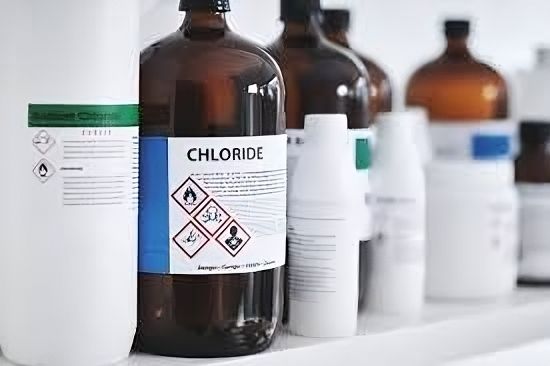

Hazardous Materials are commonly used in the healthcare environment. Safe handling, storage and disposal are key considerations for safe management of such materials. Another important consideration is what personal protective equipment should be worn when handling these items. With a variety of different hazardous materials on hand, it can be challenging to keep up with safe management and storage of these items. Occupational Safety and Health Administration (OSHA) has established standards to help ensure that workers are protected on the job. “All employers with hazardous chemicals in their workplaces must have labels and safety data sheets for their exposed workers and train them to handle the chemicals appropriately” (OSHA, 2012).


Here are a few tips to ensure that your organization is providing protective measures to keep your employees safe from exposure on the job:

  • Conduct a survey of your facility to identify what hazardous materials are being used.
  • Verify that the chemical being stored are still being used (if not, discard appropriately)
  • Ensure that Safety Data Sheets (SDS) are available electronically or in paper form such as a manual. If paper manuals are the preferred method, they must be updated routinely.
  • All employees must be able to access SDS’s immediately.
  • Keep spill kits readily available.
  • Train all employees on safe handling of hazardous materials
  • Ensure PPE is readily available.
  • Be sure to perform routine checks on eyewash stations and decontamination showers to ensure they are in good working order in the event of exposure.


SDS sheets have sixteen sections that address various safety measures specific to the chemical it describes. This standardized format was adopted to ensure ease and to minimize barriers to identifying pertinent information about products.


Accumulating hazardous materials can be dangerous. It is common to find that hazardous materials are being stored that are no longer in use. Safe disposal of these products is a must. Having an agreement with a reputable company that is well trained and certified in hazardous waste removal should be an important consideration. If you have not recently looked at your internal processes for safe handling of hazardous waste materials, do not delay any longer.


Our HCE Global experts understand the challenges that healthcare facilities are facing today. We are here to help. We offer a variety of professional development services to help grow your novice professionals into industry experts. Using a customizable approach, we will help you navigate through even the toughest of challenges. We pride ourselves on helping our clients achieve and maintain a status of excellence in the healthcare industry.


Be sure to browse Our Website for a full list of services we provide.

Contact us today at (800) 813-7117 to schedule a free consultation.


References:

https://www.osha.gov/hazcom

AED in a white cabinet on a green tiled wall, with a heart symbol and AED signage.
February 28, 2026
February may be the shortest month of the year, but in the world of healthcare facilities and regulatory oversight, it often feels like the longest. Between the launch of the Joint Commission’s Accreditation 360 and the sudden shifting of federal staffing mandates, your compliance "To-Do" list likely looks more like a "To-Don't-Panic" list. Below is your breakdown of the critical updates, deadlines, and strategic shifts defining February 2026. Regulatory Roundup: The "Great Repeal" of 2026 The most significant news hitting desks this month is the formal pivot in Long-Term Care (LTC) staffing. CMS Staffing Mandate Repealed : Effective February 2, 2026 , CMS officially rescinded the 2024 minimum staffing requirements (the 3.48 HPRD mandate). The Fine Print : While the "one-size-fits-all" numbers are gone, the Enhanced Facility Assessment requirements are still very much alive. Regulators are moving away from rigid ratios toward a "competency-based" model. You must still prove your staffing levels match your specific resident acuity. What it means for you : It’s time to double-check your assessment documentation. Auditors aren't counting heads as strictly, but they are scrutinizing the logic behind your staffing decisions. HIPAA & Privacy: The February 16th Pivot If you haven't updated your Notice of Privacy Practices (NPP) yet, you are officially behind. February 16, 2026, marked the deadline for compliance with the final rule aligning 42 CFR Part 2 (Substance Use Disorder records) with HIPAA. Lawful Holder Doctrine : Any practice receiving SUD records is now a "lawful holder," triggering new obligations for how those records are handled in legal proceedings. Reproductive Health Privacy : New prohibitions are in place regarding the disclosure of PHI for investigations into lawful reproductive healthcare. Security Rule Modernization : Th e HHS Office for Civil Rights (OCR) is phasing out the "addressable" vs. "required" distinction. By late 2026, every safeguard will be mandatory. Tech & Sustainability: Do Less with Less The 2026 facility mantra has shifted from "do more with less" to "do less with less"—meaning we are using data to eliminate wasted effort. Unified Platforms : The era of separate spreadsheets for maintenance, energy, and compliance is over. Integrated CAFM (Computer-Aided Facility Management) tools are now the standard for audit-ready reporting. The "Heart" of the Facility : Since it’s American Heart Month, it’s the perfect time to run a Life Safety check on AEDs and Cardiac Crash Carts. Ensure your battery replacement logs are digitized—paper tags are so 2024. A Note on Candor : Let’s be real—the repeal of the staffing mandate might feel like a relief, but it’s actually a trap for the unprepared. Without a fixed ratio to hide behind, your clinical judgment is the only thing standing between you and a "Statement of Deficiencies." Don't let the lack of a mandate lead to a lack of a plan.
Person holding a red heart and wooden blocks spelling
January 2, 2026
A Special Briefing for Healthcare Leaders and Providers
December 24, 2025
Compliance, Quality, and the Path Forward