New NHSN Reporting Requirements: Confident Your Organization Is Prepared?

New NHSN Reporting Requirements: Confident Your Organization Is Prepared?
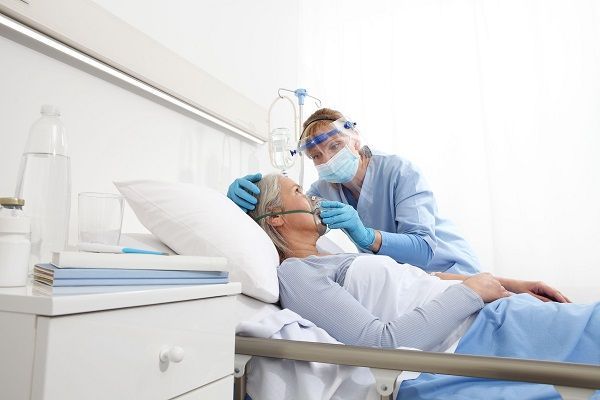
With Flu season in full swing and Covid cases on the rise, it is important to understand updated, mandatory reporting requirements for hospitals as well as critical access hospitals. The National Healthcare and Safety Network (NHSN) is working to prepare facilities for new reporting requirements through web-based education. Individuals who are tasked with reporting quality data into NHSN will need to be prepared to do so in coming months.


The Centers for Disease Control and Prevention (CDC) is providing the following upcoming webinars:

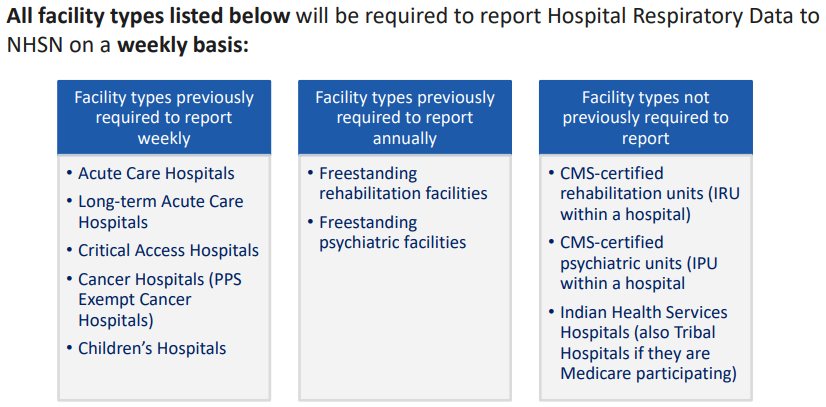
All facility types listed below will be required to report hospital respiratory data to nhsn on a weekly basis

Now is the time to ensure that data is being collected daily. In addition, data reports should be shared with the individual who is responsible for NHSN data reporting in your organization. Data points that should be collected include bed capacity, patients admitted and hospitalized with Covid-19, Influenza and RSV along with patient age. Additional reporting requirements such as personal protective equipment supply on hand is optional.


Our experts understand the challenges that healthcare facilities are facing today. Using a customizable approach, we will help you navigate through even the toughest of challenges. Whether you are in need of leadership training, preparing for a survey or require assistance with a corrective action plan, we can help! We pride ourselves on helping our clients achieve and maintain a status of excellence in the healthcare industry.


Be sure to browse Our Website for a full list of services we provide.


Contact us today at (800) 813-7117 to schedule a free consultation.


References:

https://www.cdc.gov/ncird/whats-new/updated-hospital-reporting-requirements-for-respiratory-viruses.html#:~:text=Beginning%20November%201%2C%202024%2C%20the,Secretary%20of%20Health%20and%20Human

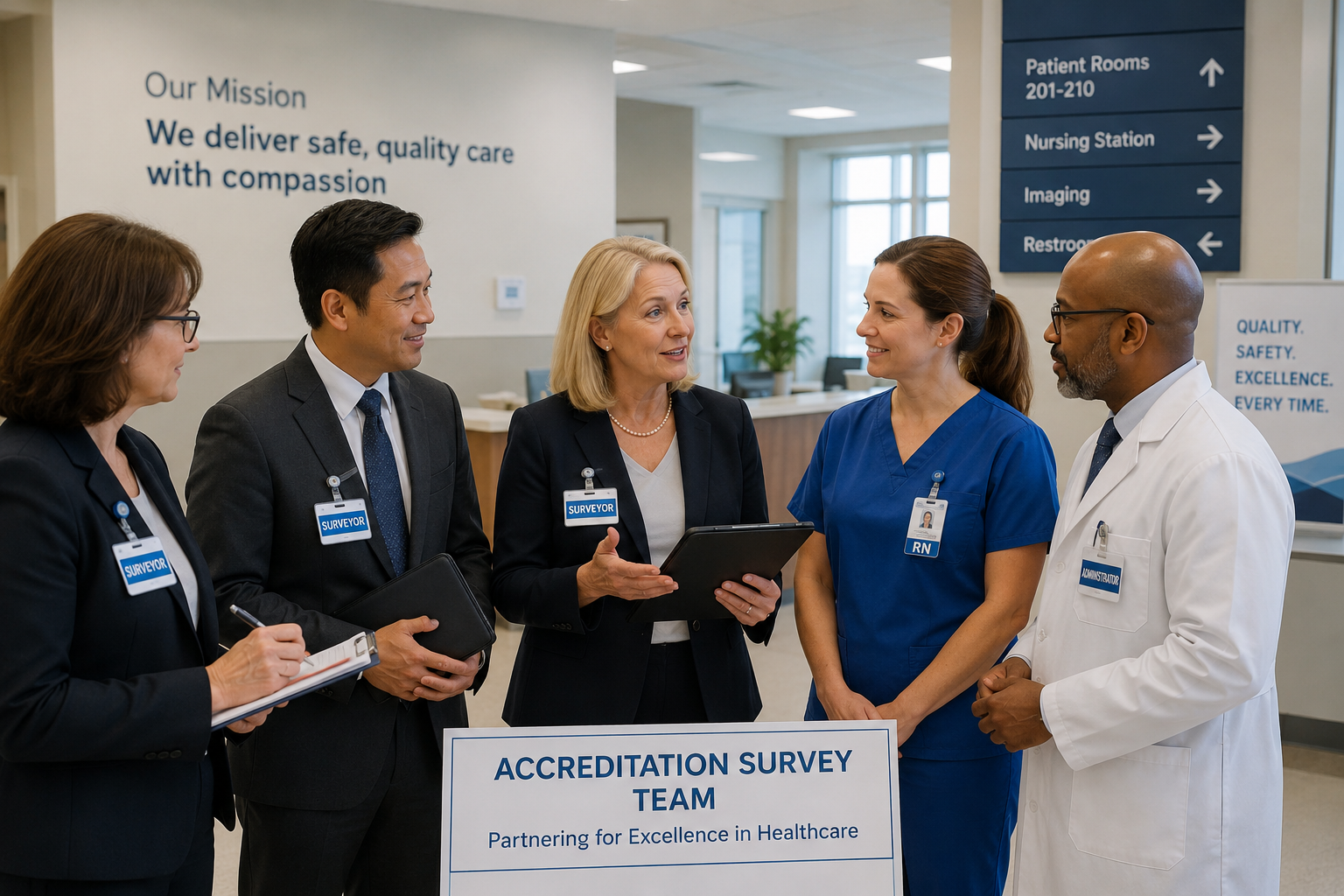
Hospital staff holding tablets during an accreditation survey team visit in a hallway
By Kim . July 1, 2026
As your accreditation survey approaches, it is important that all staff understand not only the standards and processes being evaluated, but also the professional etiquette that contributes to a successful survey experience.
Woman sitting at a desk, holding her shoulder while working on a laptop in a bright room.
June 4, 2026
OSHA's General Duty Clause and Ergonomic Risks Under Section 5(a)(1) of the Occupational Safety and Health Act (the General Duty Clause), healthcare employers are legally required to provide a work environment free from recognized hazards that cause or are likely to cause death or serious physical harm. Manual patient lifting, transferring, and repositioning represent significant ergonomic hazards. OSHA actively inspects healthcare systems for musculoskeletal disorders (MSDs) and mandates that hospitals implement engineered control solutions, such as ceiling lifts, sit-to-stand devices, and friction-reducing slide sheets.
May 5, 2026
The Technical Baseline: NFPA 99 Health Care Facilities Code NFPA 99 (2012 Edition, as mandated by CMS) establishes risk-based categories for electrical and gas systems based on the risk to patients. Category 1 spaces are those where procedures are performed that could result in major injury or death if utility systems fail. Under Chapter 6 (Electrical Systems), facilities must maintain isolated power systems (IPS) and line isolation monitors (LIM) in wet procedure locations to protect patients against electrical shock.  Survey Vulnerabilities: CIHQ and Joint Commission Directives During surveys, both TJC and CIHQ closely inspect the testing logs for these specialized electrical environments. TJC Standard EC.02.05.01 requires facilities to manage utility risks, specifically focusing on the routine inspection of ground- fault circuit interrupters (GFCIs) and the regular calibration of LIM alarms. CIHQ surveyors frequently evaluate surgical staff on their understanding of the LIM panel: if an alarm sounds, do clinicians know that it signifies a critical loss of electrical isolation that could cause patient harm if a second fault occurs? OSHA 29 CFR § 1910 Subpart S Alignment While NFPA 99 protects the patient, OSHA Subpart S (Electrical Safety) safeguards the clinical staff operating the machinery. Employers must ensure all electrical medical devices are free from recognized hazards. Exposed wiring, unapproved extension cords, or failing to lock out/tag out malfunctioning medical hardware violates OSHA standards and places both employees and patients at immediate risk.