
Healthcare Construction: A Few Things to Consider
Has Healthcare Expansion Added to the Stress Already Existing in the Industry?
march 2022
By Jody Randall MSN, RN, CIC, HACP-CMS, HACP-PE
CEO and Founder
As we continue to evolve to meet the increasing demand for healthcare services, we find ourselves experiencing a new growth spurt more commonly known as healthcare construction and expansion. According to Becker’s Hospital Review there are seven new hospital construction projects in works in the United Sates planned for 2022 with each project costing $600 million. (M. Plescia, 2022).
There is currently a significant growth trend in healthcare facilities both large and small. For many years we have been made aware that healthcare providers would be hard pressed to provide vital services to a variety of rapidly growing patient populations. Although telehealth service lines helped providers to manage an increasing number of sick patients during the pandemic, telehealth services cannot provide optimal care to acutely ill patients.
Today there are a growing number of healthcare facilities of all varieties being newly constructed or renovated. The industry continues to struggle with service line shortages predominantly in the area of behavioral health. Regardless of the type of the facility being constructed or renovated, here are a few considerations that investors and healthcare administrators should consider.
Balancing Staffing Shortages and Healthcare Facility Expansion
Hearing about healthcare staffing shortages is stressful to any healthcare professional working in the industry today. We are all well aware of the challenges and anguish that the pandemic has placed upon all healthcare professionals. Mega hospital systems continue to expand and grow at rapid rates. New healthcare facilities are also being constructed on a regular basis.
While there is a definite need to provide more access to healthcare services, can we ensure that we can staff these newly resurrected facilities? In many cases, the sparkling new healthcare setting will be quite an attractive option to those who have been stretched thin in their old familiar healthcare facilities throughout the pandemic. Salaries are more competitive than ever before, which in turn, leaves healthcare CFO’s wondering how they can adequately budget for safe staffing levels.
Will this expansion drive of future, state of the art healthcare facilities place an even bigger wedge between experienced healthcare professionals and demanding fast-paced high-stress positions that are even today nearly impossible to fill? These may be just a few things to consider when contemplating what the future of healthcare will look like.
Infection Control
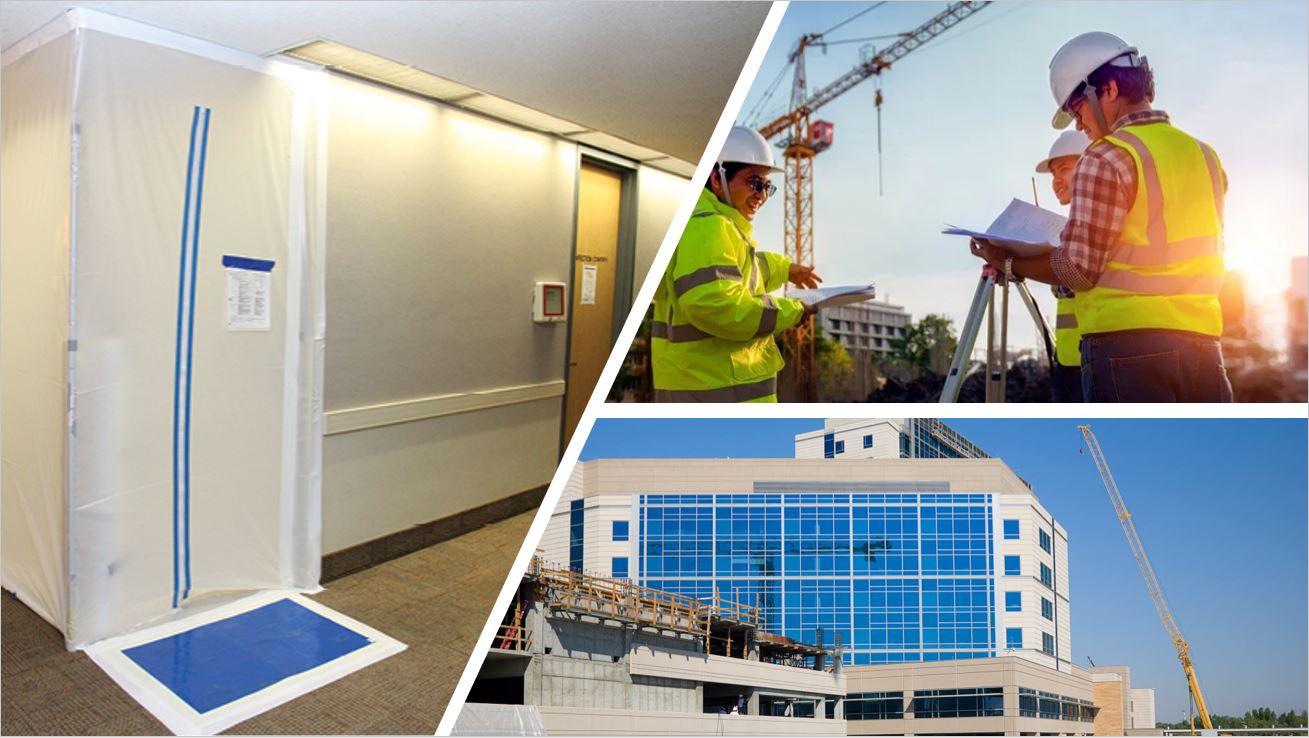
Not every professional in the healthcare industry equates construction with infection prevention risks. If you are in facility who has an experienced Infection Preventionist (IP) on your team, you are in luck! IP’s know this routine well.
Here at HCE we understand the importance of having someone with this experience to assist with risk mitigation. Prior to beginning a new project your IP would meet with administrators, engineers and contractors on any planned construction or renovation project. From there, they identify possible risk factors the work could create in the patient care setting and identify measures to be taken to control harm from occurring. Personal protective equipment, containment measures and paths of egress for debris removal are just a few things to consider.
Your IP will devise a form known as the Infection Control Risk Assessment (ICRA). The IP consults with workers and contractors about the safety measure that should be taken throughout the course of the project. The conditions of the ICRA are finalized by the IP who will routinely conduct rounds to ensure that all safety measures are being taken. When deficiencies are identified, revision and reeducation are necessary.
Supply and Demand
We are all very much acquainted with the supply chain shortage. The same is true for securing experienced contract labor. Under optimal conditions, there are strategic steps that are taken when hiring a contractor to construct a new healthcare facility or renovate an existing structure. With ongoing supply and demand struggles, finding an available contractor that is also well-versed in healthcare physical environment requirements can be an even greater challenge.
This is an area that we strongly advise where you should not take short cuts. Although you may have a project deadline in mind, cutting corners when it comes to healthcare construction should never be an option. Deficiencies identified during initial or repeat surveys in addition to any rework that will be required is never worth the risk.
We recommend investor and administrators follow their normal process for vetting contract labor. We also recommend that you have flexibility with your construction deadlines due to labor demand. It is always prudent to exercise a little patience to ensure the best possible and safest outcome for all; not to mention, avoiding unnecessary additional costs.
HCE is Here to Help
Healthcare Consulting Experts LLC was built based upon our understanding of the challenges that all healthcare facilities are facing today. Healthcare professionals strive to deliver the best possible care to all patients. We can help your facility through the difficult times and put you back on track to a less stressful tomorrow.
Don’t take chances! Our experts can assist with regulatory compliance requirements for whether you are building a new, state of the art project or renovating an existing structure. Be sure to visit our website at
www.healthcareconsultingexperts.com
to see a full list of the services that we provide. Contact us today at 1(800) 813-7117 for a free initial consultation.
Don’t leave it to guesswork - Leave it to the experts!
References
https://www.beckershospitalreview.com/capital/7-hospital-construction-projects-worth-600m-or-more.html
Please join us by clicking on any of the icons below to leave a comment or for more informati
on and updates: