Ultrasound Transducers and Outbreak
Confident Your Organization is Cleaning Correctly?
July 2023
By Jody Randall MSN, RN, CIC, HACP-CMS, HACP-PE
CEO and Founder
“In 2016, The Joint Commission found that 74% of all immediate threats to life were related to improperly sterilized or high-level disinfected equipment.” (1)
There is an increased risk of cross-contamination when a transducer comes into direct contact with blood and body fluids. Subsequently, use of transducer sheaths does not eliminate the need for conducting a decontamination process.
Ultrasound transducers are used to explore and diagnose various conditions as well as vital organ function. While some transducers can perform in-depth exploration using a topical approach, other types of testing may require a more invasive approach.
When a transducer is used in a sterile body cavity or exploration of sterile tissues, sterilization of the transducer is the required method of disinfection. When a transducer is used for exploration that involves non-intact skin or mucous members, then a high-level disinfection process is required for transducers following these types of procedures.
Decontamination levels range from low (non-critical) to high (critical). The method of decontamination of equipment should be identified based upon its Spaulding classification. The chart below outlines the Spaulding classification of equipment decontamination (3):
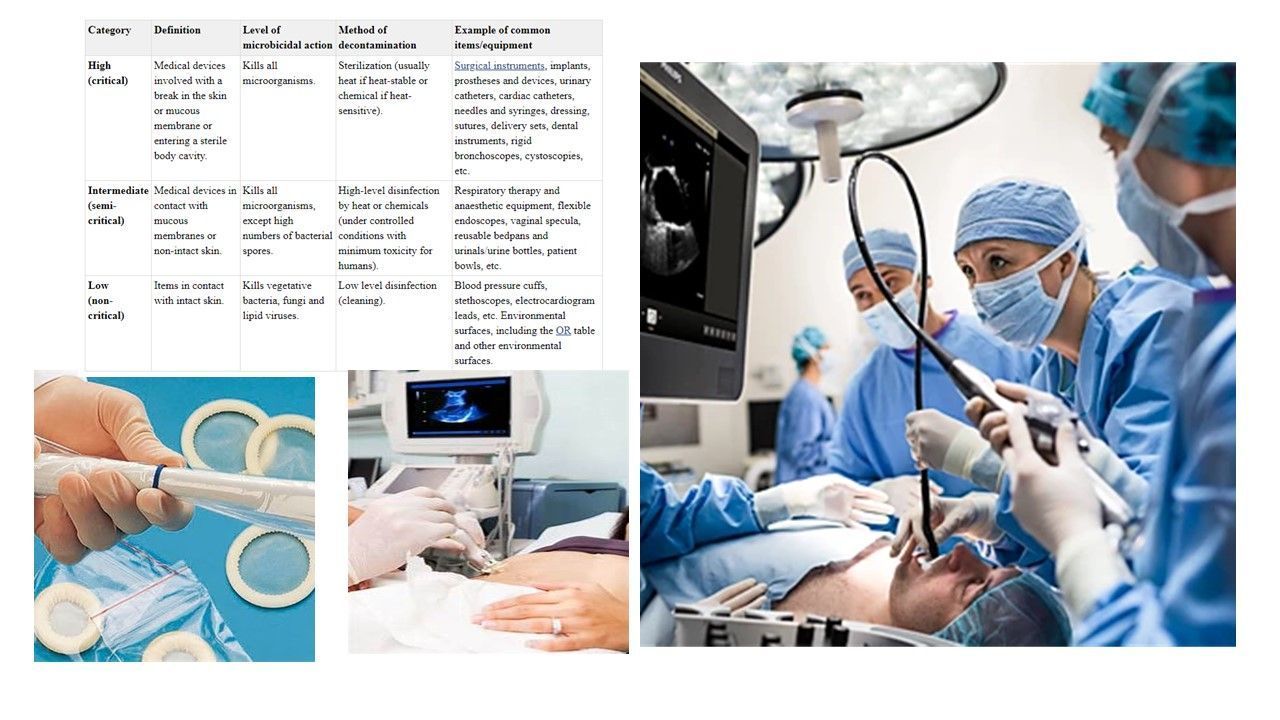
How confident are you that your team members are performing the required level of disinfection on various types of transducers?
In addition to choosing the appropriate level of decontamination, it is necessary to follow the manufacturer's instructions on appropriate cleaning and disinfection procedures. When it comes to instructions for use (IFUs) from the manufacturer, you should be able to not only find the step-by-step process for cleaning the equipment, but also the appropriate chemicals that can safely be used in the cleaning and disinfection process.
Risks associated with failure to follow IFUs can result in harm to patients, damage to equipment, and voidance of warranties. It is the responsibility of the healthcare facility to ensure policies and procedures are in place that address ultrasound transducer cleaning and disinfection processes.
Training and competency should also be a top priority. A critical part of ensuring these practices are done correctly is establishing competency of team members who are performing these tasks. After initial competency has been established, routine and periodic re-evaluation of performance is critical to ensure continuation of safe practice.
In our experience, we have found that improper cleaning and disinfection of equipment is more common than you might think. We encourage all healthcare organizations to take a close look at staff training, internal practices, manufacturer recommendations and policies/procedures to mitigate risk and harm to patients.
HCE is Here to Help
Healthcare Consulting Experts LLC was built based upon our understanding of the challenges that healthcare facilities are facing today. Healthcare professionals strive to deliver the best possible care to all patients. We can help your facility through the difficult times and put you back on track to a less stressful tomorrow.
Don’t take chances! Our experts can assist with regulatory compliance requirements for whether you are building a new, state-of-the-art project or renovating an existing structure. Be sure to visit Our Website to see a full list of the services that we provide.
Contact us today at +1 (800) 813-7117 for a free initial consultation.
Please join us by clicking on any of our icons below to leave a comment or for more informati
on and updates.
References:
- https://www.ajicjournal.org/article/S0196-6553(18)30255-4/pdf
- https://www.jointcommission.org/resources/news-and-multimedia/blogs/ambulatory-buzz/2021/10/best-practices-in-reprocessing-surface-ultrasound-transducers-in-ambulatory-care-settings/
- https://www.ncbi.nlm.nih.gov/books/NBK536426/table/ch3.tab7/