Medical Staff Credentialing
How Do Your Providers Measure Up?
SEPTEMBER 2023
By Jody Randall MSN, RN, CIC, HACP-CMS, HACP-PE
CEO and Founder
“In general, any licensed, independent healthcare professional who has been permitted by law and regulated by a licensing organization to provide services and care without supervision or direction within the scope of the individual’s license needs to be credentialed.” (Patel & Sharma, 2022).
It is all too common for healthcare facilities to become easily overwhelmed with day-to-day operations. Staffing shortages easily contribute to daily stress for all healthcare organizations today. While we strive to maintain safe patient environments, it is easy to overlook essential medical staff credentialing requirements.
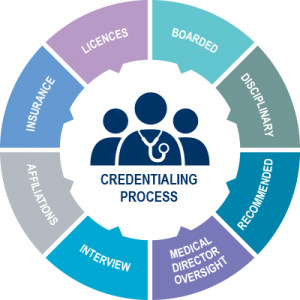
Medical staff committee members and governing boards have a responsibility to review applicants requesting privileges. The medical staff committee makes recommendations to the governing board for appointment. The governing board makes the final determination on approval or denial. When determining if applicants should be recommended for privileges to practice, considerations should include education, experience relative to privileges being requested, references, history of malpractice and evidence of ongoing continuing education.
Providers should never be granted privileges that they are not qualified to perform or that would be considered beyond the level of care that the facility can provide.
Medical staff credentialing requires oversight by individuals who are well-versed in credentialing requirements. Using the National Practitioner Database can help facilities to learn more about providers background including history or pending legal action against a provider. When providers are appointed to practice, they should complete onboarding and competency training required by the organization. They should also be apprised and familiarize themselves with medical staff bylaws for which they are subject to follow.
Periodic Review
Healthcare organizations are also responsible for conducting periodic review of all medical staff. Common problems that we find when conducting medical staff audits include expired insurance, certifications and licensure. Establishing a structure to conduct ongoing audits of medical staff files is critical.
“Negligent credentialing lawsuits surface when a patient who has been injured in a hospital sues their medical provider for malpractice and the hospital for credentialing the physician” (Haefner, M. 2019).
Healthcare organizations must demonstrate compliance with federal and state regulations for conditions of participation for medical staff. Understanding federal and state regulations is critical.
Leadership and medical staff should take time to review their current medical staff credentialing practices. Familiarization with organizational by-laws is also necessary for those who have a key role in review and recommendation for credentialing providers.
We recommend meeting with your medical staff credentialing assistant to determine how they are maintaining files, conducting audits and communicating with providers to prevent deficiencies. There are a variety of tools to help streamline the credentialing process. Some examples include standardized applications, electronic record keeping platforms and credentialing specialist services.
Understanding how your organization manages credentialing is essential to avoiding risk of patient harm, litigation and financial penalties.
Be sure to take a deep dive into your current credentialing process today.
At HCE, we understand the nature of the healthcare environment can be stressful and fast-paced. Credentialing is a big part of the survey process and should never be overlooked for the sake of taking shortcuts.
HCE is Here to Help
Healthcare Consulting Experts LLC was built based upon our understanding of the challenges that healthcare facilities are facing today. Healthcare professionals strive to deliver the best possible care to all patients. We can help your facility through the difficult times and put you back on track to a less stressful tomorrow.
Don’t take chances! Our experts can assist with regulatory compliance requirements for whether you are building a new, state-of-the-art project or renovating an existing structure. Be sure to visit
Our Website to see a full list of the services that we provide.
Contact us today at +1 (800) 813-7117 for a free initial consultation.
Please join us by clicking on any of our icons below to leave a comment or for more informati on and updates.
References:
- Patel R, Sharma S. Credentialing. [Updated 2022 Oct 24]. In: StatPearls [Internet]. Treasure Island (FL): StatPearls Publishing; 2023 Jan-. Available from: https://www.ncbi.nlm.nih.gov/books/NBK519504/
- https://www.ecfr.gov/current/title-42/chapter-IV/subchapter-G/part-482/subpart-C/section-482.22
- https://www.beckershospitalreview.com/legal-regulatory-issues/how-hospital-and-physician-leaders-can-prevent-negligent-credentialing-lawsuits.html