NHSN Annual Facility Survey

A person is writing on a piece of paper with a pen.

If your facility is enrolled in the National Healthcare Safety Network (NHSN), then submitting an annual facility survey for the previous year is a requirement. If your facility was not operational in 2023 but you are enrolling, this information must be provided at the time of enrollment.


The deadline for completion is March 1st of each calendar year. If your facility has been operational, it is important to update the survey to accurately address various components of the survey based on the previous year. There are a variety of online educational modules available to assist facilities through the completion process. You will also find instructions for completing the survey. You can find this information on the Centers for Disease Control and Prevention (CDC) website


It is best to begin working on the survey well in advance of the deadline for submission.

We recommend reviewing all components of the survey and delegating review and completion to personnel that oversee corresponding departments. Assistance from leadership from the following departments will be needed to complete the survey:


  • Infection Prevention
  • Microbiology/Lab
  • Quality
  • Pharmacy
  • Nursing
  • Facilities
  • Medical Records
  • Contractors, if applicable

Facilities will need to provide response to a variety of questions on the following topics:

  • Type of facility
  • Services Provided
  • Volumes
  • Laboratory testing capabilities and equipment
  • Infection Prevention Practices
  • Neonatal/newborn level of care if applicable
  • Antimicrobial Stewardship Practices
  • Sepsis Management and Practices
  • Facilities Water Management


You can preview the various NHSN annual survey questionnaires associated with the corresponding facility types listed below:


We recommend that you check with your NHSN administrator to determine if your facility’s annual survey has been completed and submitted. It may also be a good idea to create a task force that includes departmental leaders. This provides a great opportunity to delegate the task of completion of survey questions relative to their respective departments.

HCE Global is Here to Help

HCE Global understands the challenges that healthcare facilities are facing today. We are here to help. Using a customizable approach, we will help you navigate through even the toughest of challenges. We pride ourselves on helping clients achieve and maintain a status of excellence in the healthcare industry.


Be sure to visit Our Website for a full list of services we provide.

Contact us today at +1 (800) 813-7117 to schedule a free consultation

HCE Global
Woman sitting at a desk, holding her shoulder while working on a laptop in a bright room.
June 4, 2026
OSHA's General Duty Clause and Ergonomic Risks Under Section 5(a)(1) of the Occupational Safety and Health Act (the General Duty Clause), healthcare employers are legally required to provide a work environment free from recognized hazards that cause or are likely to cause death or serious physical harm. Manual patient lifting, transferring, and repositioning represent significant ergonomic hazards. OSHA actively inspects healthcare systems for musculoskeletal disorders (MSDs) and mandates that hospitals implement engineered control solutions, such as ceiling lifts, sit-to-stand devices, and friction-reducing slide sheets.
May 5, 2026
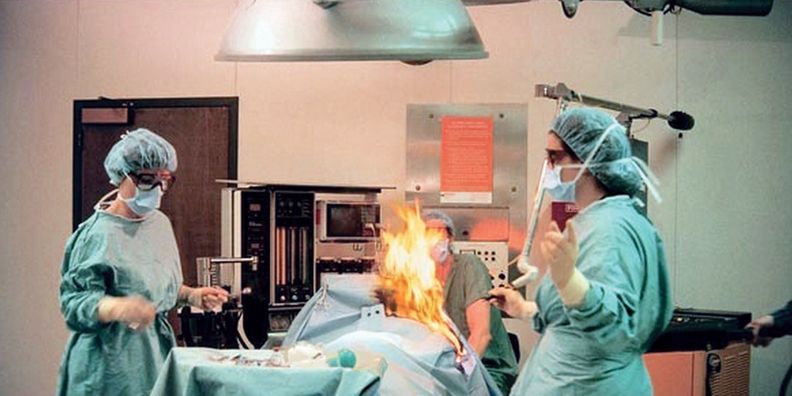
The Technical Baseline: NFPA 99 Health Care Facilities Code NFPA 99 (2012 Edition, as mandated by CMS) establishes risk-based categories for electrical and gas systems based on the risk to patients. Category 1 spaces are those where procedures are performed that could result in major injury or death if utility systems fail. Under Chapter 6 (Electrical Systems), facilities must maintain isolated power systems (IPS) and line isolation monitors (LIM) in wet procedure locations to protect patients against electrical shock.  Survey Vulnerabilities: CIHQ and Joint Commission Directives During surveys, both TJC and CIHQ closely inspect the testing logs for these specialized electrical environments. TJC Standard EC.02.05.01 requires facilities to manage utility risks, specifically focusing on the routine inspection of ground- fault circuit interrupters (GFCIs) and the regular calibration of LIM alarms. CIHQ surveyors frequently evaluate surgical staff on their understanding of the LIM panel: if an alarm sounds, do clinicians know that it signifies a critical loss of electrical isolation that could cause patient harm if a second fault occurs? OSHA 29 CFR § 1910 Subpart S Alignment While NFPA 99 protects the patient, OSHA Subpart S (Electrical Safety) safeguards the clinical staff operating the machinery. Employers must ensure all electrical medical devices are free from recognized hazards. Exposed wiring, unapproved extension cords, or failing to lock out/tag out malfunctioning medical hardware violates OSHA standards and places both employees and patients at immediate risk.
Red fire alarm box on a white hallway wall with a long corridor in the background
April 4, 2026
CMS Conditions of Participation (CoPs) and the Unified Focus The Centers for Medicare & Medicaid Services (CMS) establishes the baseline for safety through the Conditions of Participation (CoPs). Under 42 CFR § 482.41 (Physical Environment), hospitals must ensure that the physical plant is constructed, arranged, and maintained to secure the safety of patients. CMS holds leadership strictly accountable for ensuring that life safety deficiencies do not interfere with clinical intervention. When a surveyor enters a facility, they cross- reference the clinical patient logs with facility maintenance schedules to ensure environment-driven risks—such as positive/negative pressure room failures—did not impact immunosuppressed patients. Accrediting Bodies: CIHQ, Joint Commission and Other Aos’ Interventions Accrediting organizations like The Joint Commission (TJC) and the Center for Improvement in Healthcare Quality (CIHQ) act as the enforcement arms for CMS via deemed status. TJC’s Environment of Care (EC) and Life Safety (LS) chapters explicitly detail how physical space directly impacts clinical delivery. For instance, TJC Standard EC.02.03.05 requires hospitals to maintain and test fire protection and suppression systems, mapping directly back to Life Safety Code compliance. Simultaneously, CIHQ’s structural surveys place massive emphasis on a unified environment. CIHQ approaches physical plant standards as a direct extension of standard clinical operations. They emphasize that blocked egress corridors or improperly stored medical equipment don't just constitute technical facility violations; they are direct barriers to rapid code-blue response and emergency patient evacuations.